
The GEO Series — Part 5 of 5: What Is GEO? · GEO vs SEO · Get Recommended by ChatGPT · The 6-Month GEO Plan · Free Listings + PPC + GEO
Your products can show up in Google Shopping three ways: free, paid, and AI. Most stores only do one of them — and pay for clicks they could have gotten for free. Here is how all three work together.
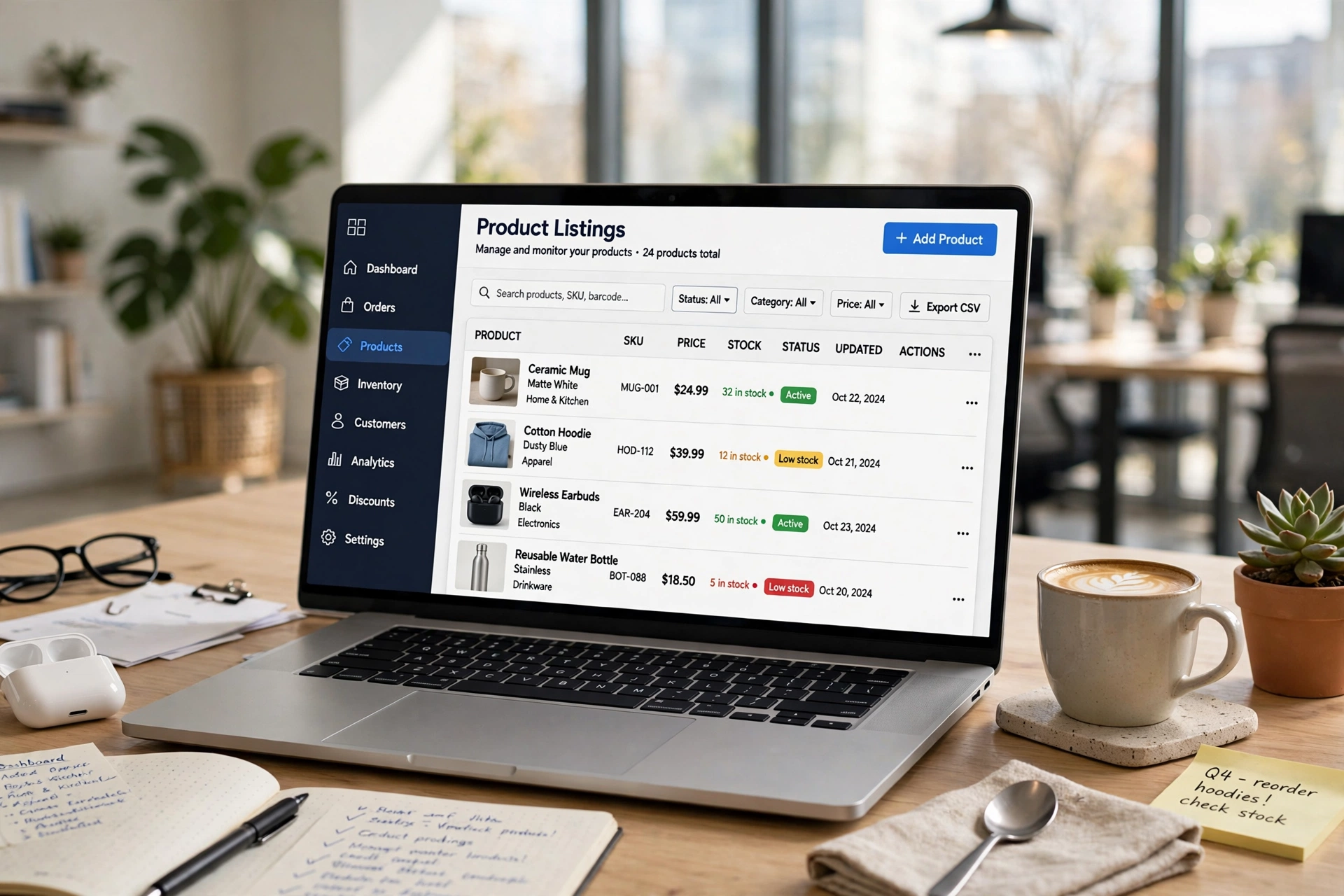
Google offers free product listings through Google Merchant Center. Your products appear in Google Shopping results without you paying per click. What that takes:
Free listings are not a smaller version of ads. They are a separate channel, and they work best when someone actually manages them instead of setting them up once and forgetting them.
Paid Google Ads are a separate service from free listings, and they do a different job:
This is the part most agencies get wrong: they bid on clicks the free listings would have won anyway. The right way:
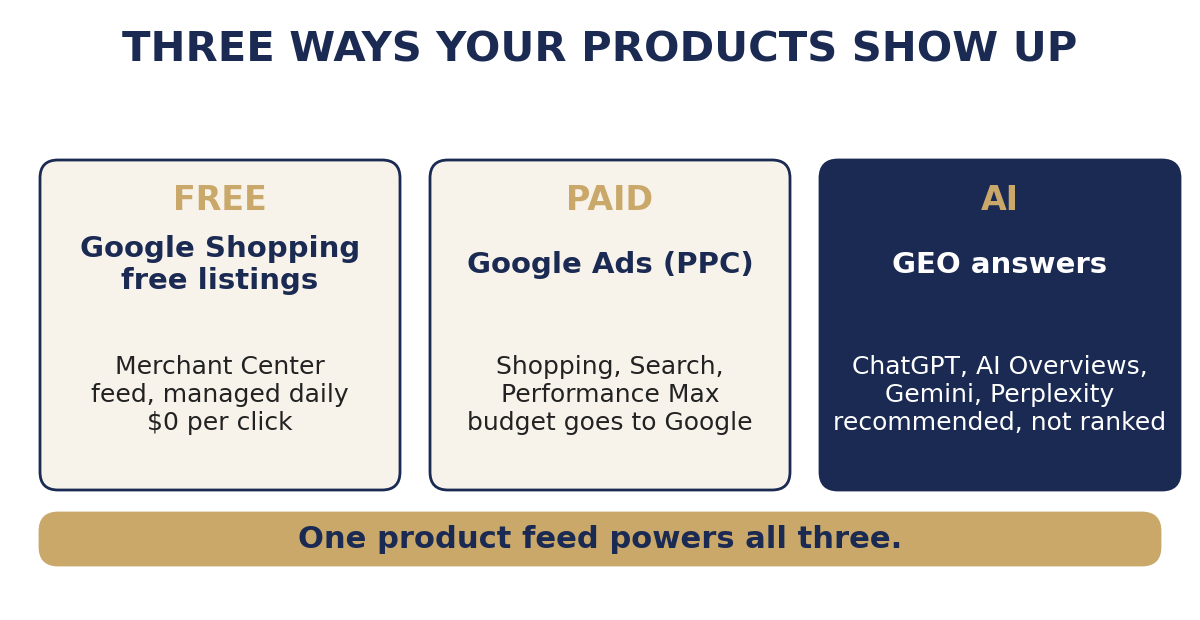
Google Shopping feed management and PPC ads management are included in the $4,999.99 automation plan — the quoted program that runs the whole business, not just the ads. The advertising budget itself is separate: it goes directly to Google, in an account you own. You keep full ownership of your Shopify store, your Merchant Center, your Google Ads account, your customer data, and every campaign and feed — if you ever leave, it all stays yours.
GEO — Generative Engine Optimization — is the third leg. While free listings and PPC put your products in Google Shopping, GEO puts them in AI answers: ChatGPT, Google AI Overviews, Gemini, and Perplexity. The same clean product data, the same accurate feeds, and the same trusted reputation feed all three. GEO itself is a separate service: a 6-month program, paid as a 3-month retainer, priced by quote — book an appointment to get yours. One feed, one store, one team, and every channel working off the same truth.
Free listings, paid ads, and AI visibility — together, that is how a store gets found everywhere its customers are looking.
Back to the start of the series: Part 1 — What Is GEO? Generative Engine Optimization Explained


