
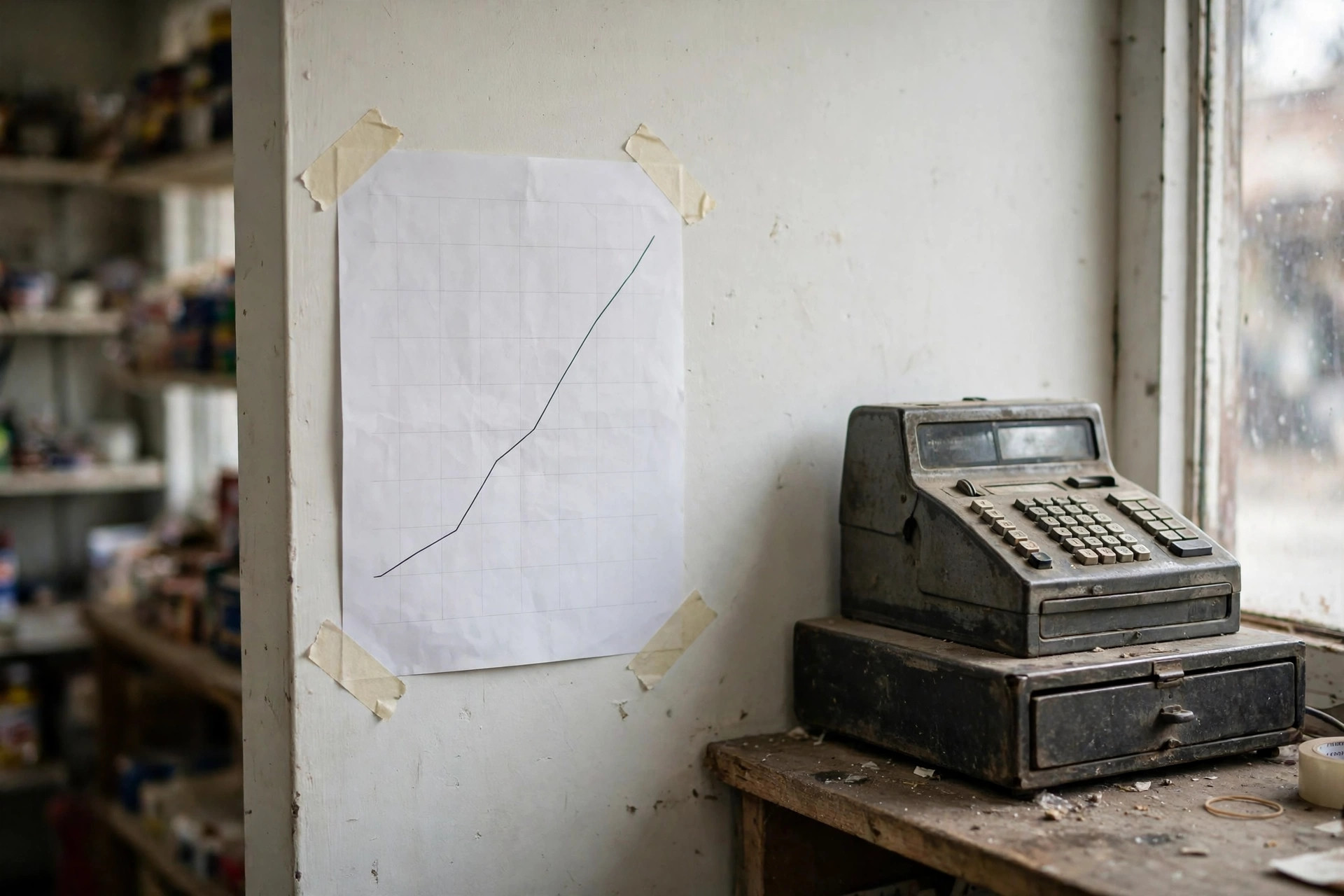
Ask most owners what their manager produced last month and you'll get a version of the same frustrated question: "What exactly am I paying for?" The reports look impressive — posts published, tasks closed, impressions up — and the bank account tells a different story. One owner summed up the whole genre: "a chart that climbs while your bank balance doesn't."
That's the Motion Machine at work: reporting that measures the helper's activity instead of the store's outcomes. The retainer bought you hands, and the reports measure the motion of the hands. Tracking performance properly means refusing that trade. You agree on a small set of numbers the manager actually influences, you review them on a fixed schedule, and you judge trends — not busywork, and not single days.
Not every metric is a fair scorecard. Traffic volume, for example, may belong to whoever runs your ads. Hold the manager accountable for what their work touches:
Pick four to six. More than that and nobody reads the report — which is how vanity dashboards survive.
One page, same format, every week:
Trends over four to eight weeks tell you the truth. One bad week is weather; two bad months is climate.
Revenue is a lagging indicator — by the time it drops, the cause happened weeks ago. Leading indicators warn you early: product pages updated, new offers tested, email flows checked, response times slipping, tasks aging in the queue. A good manager reports both. A manager who only reports revenue is reporting the scoreboard, not the game — and a manager who only reports activity isn't reporting at all.
Once a month, sit down with the scorecards and ask three questions: What moved the numbers? What did we do that didn't work? What gets stopped, started, or tested next month? Also inspect the work itself occasionally — open five random completed tasks and check the quality. Output you never inspect quietly degrades.
Performance tracking fails when the targets were never stated. In the first week, write down: the metrics, the targets, the report format, and the review dates. "Improve conversion" is a wish. "Report weekly on the tests you're running to move conversion, and what each test did" is a job.
The standard is the one owners describe after they've been burned once: reports tied to money, not motion — written in plain language, showing what your spend produced, so you can answer "what did I get last month for what I paid?" without opening a single dashboard.
Store owners compare scorecards and reporting setups in The Ecomm Champs | Shopify Growth, Ads & CRO group — worth a look if you're building your first one. Our revenue operations and store management services show how we report on the stores we run, if you want a reference point.


